
Search Colleges, Exams, Schools & more


Login
IMAANDAAR: A Summer Programme hosted at Jindal Global Law School in 2026
There comes a defining moment in the life of every young student when dreams begin to take the shape of decisions. One of the most significant among them is the choice of a university, a decision that will influence not only academic learning but also confidence, friendships, worldview, character, leadership, and future aspirations.
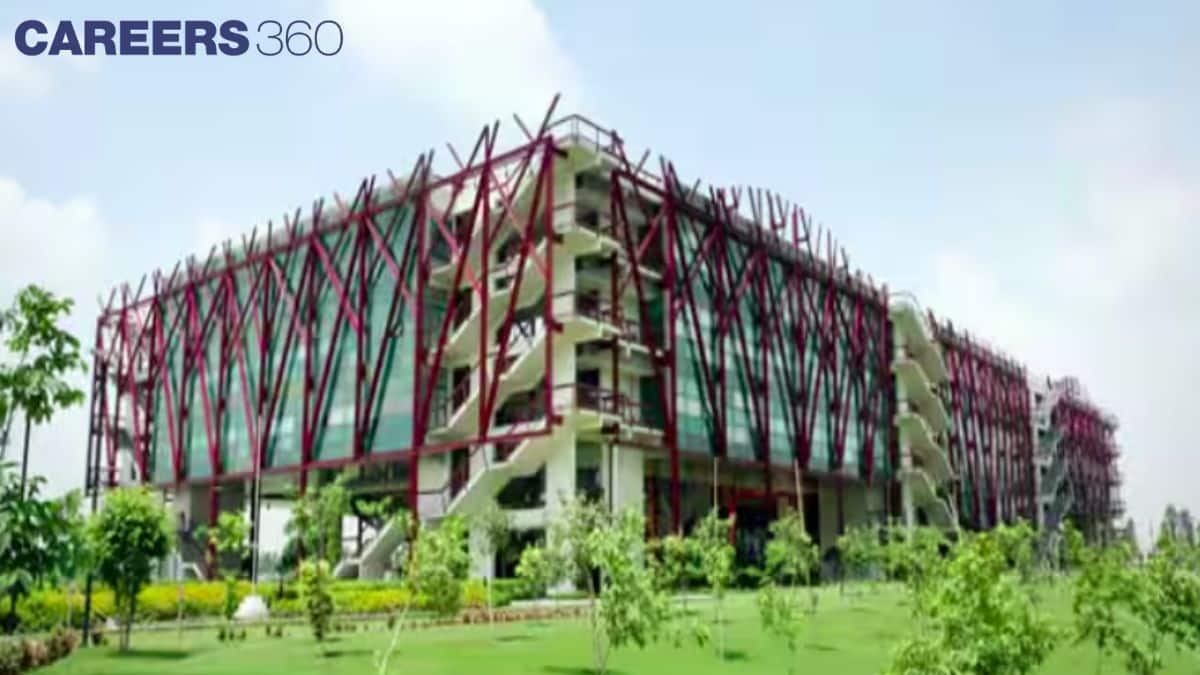
Yet, in today’s hyper-digital age, many students choose universities the way consumers choose products online: through social media reels, brochures, advertisements, and hearsay. They compare statistics, placement reports, infrastructure photographs, and fee structures without ever truly experiencing the institution they hope to call home for the next several years.
But a university is not merely a collection of classrooms and buildings.
Also See: JGLS Sonepat Admissions
A thriving ecosystem where ideas are born, ambition meets dialogue, and diverse perspectives fuel continuous transformation.
And therefore, before a student applies to a university, they must first experience university life.
They must walk through a campus.
Be a part of university classrooms.
Spend time in its libraries (physical) and discover digital resources.
Interact with its faculty.
And whenever possible, stay on campus for a few days.
Because some decisions are too important to be made from a screen.
As the old proverb wisely reminds us, "A journey of a thousand miles begins with a single step.” Often, that first step begins with entering a university campus long before admission.
Early Campus Exposure Builds Aspiration: Universities Are Not Just Institutions; They Are Intellectual Cultures
For many school students, universities often appear distant, intimidating, and abstract.
But the moment a student walks into a university campus, something changes psychologically.
Suddenly, higher education no longer feels like a distant dream. It becomes visible, tangible, and achievable.
Sitting in a classroom. Watching a moot court proceeding. Participating in a workshop. Listening to professors. Interacting with university students. Eating in a campus cafeteria. Spending evenings in residence halls.
These seemingly ordinary experiences can become extraordinarily transformative for a young learner.
A student begins to imagine:
“Perhaps I belong here someday.”
And that single thought can change ambition forever.
Many students return from university immersion experiences with renewed academic motivation and greater seriousness towards their goals because they finally understand what they are preparing for.
“Seeing is believing.”
Sometimes, one meaningful experience on a university campus can inspire a student more profoundly than years of conventional career counselling.
Students Learn to Reflect on Their Own Future
One of the greatest benefits of experiencing university life early is that it encourages self-reflection.
School education often provides structure, familiarity, and routine. University life, however, introduces independence, responsibility, intellectual freedom, and self-directed growth.
Exposure to university environments encourages students to ask important questions:
What kind of academic environment suits me best?
Do I enjoy discussion-based learning?
Am I comfortable living independently?
What kind of peers inspire me?
What subjects genuinely excite my curiosity?
What kind of life do I envision for myself?
These are not questions that can be answered through online research alone.
They emerge only through lived experience.
A student who spends time on a university campus begins not merely to explore institutions but also to discover themselves.
Learning Beyond Textbooks and Examinations
One of the most significant differences between school education and university education lies in the transition from memorisation to critical thinking.
At great universities, students are taught not merely what to think, but how to think.
Campus immersion programmes introduce school students to entirely new forms of learning:
Interactive discussions
Debate and dialogue
Research-based thinking
Problem-solving exercises
Simulations and workshops
Public speaking and advocacy
Team-based learning
Students begin to understand that education is not confined to textbooks or examinations. It is connected to real-world issues, ethics, governance, leadership, innovation, public policy, technology, law, and society itself.
This exposure broadens imagination. And imagination is often the beginning of ambition.
Residential Experiences Build Independence and Confidence
The benefits of campus exposure become even more meaningful when students participate in residential university programmes.
“Experience is the best teacher.”
Living on campus, even for a few days, teaches lessons that no classroom alone can provide.
Students learn:
Time management
Communication skills
Teamwork
Leadership
Adaptability
Self-discipline
Emotional maturity
Social confidence
They learn how to interact with unfamiliar people, manage schedules independently, participate in group activities, and navigate new environments.
Such experiences prepare students emotionally for the transition into university life later.
Indeed, many students struggle in their first year of university not because they lack academic ability, but because they are unfamiliar with independence and self-management.
A short residential experience can become an invaluable early preparation for adulthood itself.
The Value of IMAANDAAR Summer Program
Universities must move beyond simply recruiting students during admissions season. They must actively create opportunities for school students to experience intellectual life meaningfully before applications begin. The best universities in the world are not merely institutions that admit students. They are institutions that inspire them.
It is in this context that initiatives such as the IMAANDAAR Summer Program assume extraordinary significance.
Hosted at Jindal Global Law School, O.P. Jindal Global University, the IMAANDAAR Summer Program represents a pioneering effort to introduce high school students to the world of advocacy, critical thinking, public speaking, negotiation, dispute resolution, and leadership through an immersive residential experience.
Designed for students from Classes IX to XII, the programme offers young learners the opportunity to spend a meaningful week on a globally benchmarked university campus while experiencing the intellectual culture of higher education firsthand.
Students engage in:
Advocacy and public speaking exercises
Moot court simulations
Legal reasoning workshops
Negotiation and mediation sessions
Team-building activities
Faculty interactions
Leadership development experiences
Importantly, the programme is not merely about law.
It is about confidence.
Communication.
Critical thinking.
Curiosity.
Ethical leadership.
And discovering one’s voice.
For many students, such experiences become defining moments, moments where aspiration begins to feel real.
In a rapidly changing world shaped by artificial intelligence, globalisation, public policy challenges, and technological transformation, young people need more than examination scores. They need exposure, perspective, confidence, and intellectual adaptability.
Know More: IMAANDAAR Summer Programme
A Message to Parents and Schools
Parents and schools must also rethink how they guide students through university selection.
Career counselling cannot remain limited to rankings, entrance examinations, and application deadlines. Students require exposure, reflection, and meaningful experiences.
Schools should actively encourage university visits and immersion opportunities as part of educational development.
Parents should recognise that a few days spent on a university campus can influence a student’s future more profoundly than months of online research.
After all, the cost of making the wrong university choice, emotionally, academically, and financially, is far greater than the investment required to explore institutions meaningfully beforehand.
Apply Now: IMAANDAAR Summer Programme 2026
Environment, Identity, Aspiration, and future possibility.
Choosing a university is not simply an academic decision.
It is a decision about environment, identity, aspiration, and future possibility.
That decision deserves more than a Google search.
Students must experience university life before they apply. They must walk through campuses, observe classrooms, interact with faculty, spend time with peers, and immerse themselves in the culture of learning.
Because somewhere between the classrooms, libraries, residence corridors, conversations over coffee, and moments of reflection under campus skies, young people often discover something far more important than a university.
They begin to discover themselves.
And perhaps that is where true education really begins.
Disclaimer: This content was distributed by JGLS Sonepat and has been published as part of Careers360’s marketing initiative.
Articles
Upcoming Law Exams

Certifications By Top Providers
Explore Top Universities Across Globe
List of Related colleges
Questions related to Jindal Global Law School, Sonipat
On Question asked by student community
Have a question related to Jindal Global Law School, Sonipat ?
You should ideally fill out the Jindal Global Law School (JGLS) application form before receiving your LSAT score. This allows you to submit your application in advance and ensure all necessary components are completed on time. However, make sure to indicate in your application that your LSAT score is pending.
Hello,
Jindal global University situated in sonipat, Haryana , the college offer 2 five year Integrated law course BA-LLB and BBA-LLB. And 3 year program for undergraduates. And 1 year LLM residential PG course . The institute is a self Financed Institute
The admission taken in the college on the
Hello aspirant,
Hope you are doing good..!!!!
Indeed, as per the arrangement of o.P Jindal Global University every single understudy of the graduate school needs to live in the lodging given by the University. The charges of the operation Jindal Global Law School inn is so high around 2.76 lakh.
Hi, the placements here are excellent. According to reports of 2020, 88 students participated for job placements and 83 were placed and in my opinion that is a very good number. Highest package offered was 15 LPA and the average package offered is 9.5 LPA. Applications are still open. Hope
Both Jindal Global Law School and Symbiosis are good in different aspects. It depends upon you which one fits your situation. I am going to explain the merits and demerits (quite minimal) with a short comparison between two of the finest private law schools in India.
The factors that attract

Applications for Admissions are open.
Ranked 1 st among Top Law Schools of super Excellence in India - GHRDC | NAAC A+ Accredited | #36 by NIRF
REVA University Law Admissions 2026
ApplyLast Date to Apply: 17th August | QS I-Gauge Diamond Rated | NAAC A+ Accredited | 621 Recruitment Partners | INR 40 LPA Highest CTC | 4482 Job offers
SRM University, Chennai Law UG 2026
ApplyNAAC A++ Accredited | Ranked #11 by NIRF
SRM University, Chennai LLM 2026
ApplyNAAC A++ Accredited | Ranked #11 by NIRF
ICFAI University,Dehradun-Law Admissions 2026
ApplyBar Council of India (BCI) approved | Accredited by LAWASIA | Ranked 13th , among the Best Law Colleges (Private) in India by IIRF
DSU- Dayananda Sagar University LAW 2026
Apply60+ Years of Education Legacy | UGC & AICTE Approved | Prestigious Scholarship Worth 6 Crores